
Caring for Curtains and Fabric Blinds in Singapore Humidity
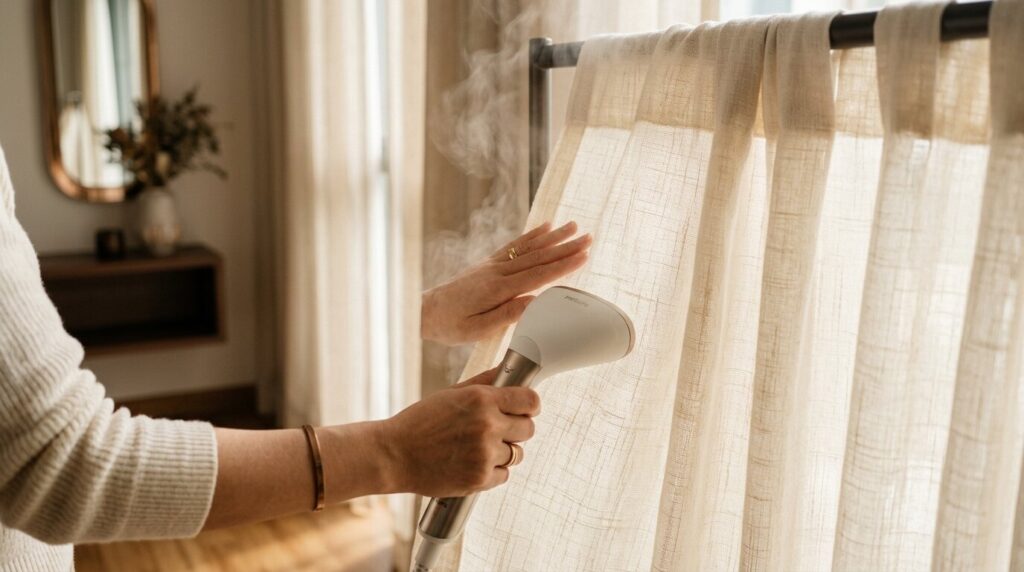
Curtains and fabric blinds are among the most neglected things in a home, largely because they never look obviously dirty. In our climate that is misleading — humidity, dust and still air work on fabric slowly and quietly, and by the time a curtain smells musty the problem has been developing for months.
What Humidity Actually Does
Fabric absorbs moisture from the air and holds it. Combined with settled dust, that damp becomes a comfortable environment for mould and mildew, which is what produces the characteristic musty smell in a room that has been closed up.
Curtains near a kitchen or bathroom, or in a room that stays shut with the air-conditioner off, are the most at risk.
The Routine That Prevents Most Problems
Every Few Weeks: Move the Air
The single most effective habit costs nothing. Open the windows and let air move through the fabric for an hour or two, ideally on a dry, breezy morning. Still air is what lets damp settle in.
Monthly: Remove the Dust
Vacuum curtains with a soft brush attachment on low suction, working from top to bottom. Dust is what gives moisture something to feed on, so removing it regularly prevents far more than it seems to.
For fabric blinds, a soft brush or a dry microfibre cloth along the surface is enough. Do this before anything damp touches them — wiping a dusty blind just makes mud.
Occasionally: Spot Clean
Deal with marks early, while they are still surface marks. Blot with a barely damp cloth and a small amount of mild detergent, working gently from the outside of the mark inward. Never scrub, and never soak — a wet patch in humid weather can dry slowly enough to leave a ring or start mildew.
Before Washing Anything
Check the care label first, and treat this as genuinely important rather than routine advice:
- Many lined and heavier curtains should not be machine washed. Lining and face fabric can shrink at different rates, which permanently distorts the curtain.
- Blackout coatings can be damaged by heat and aggressive washing.
- Fabric blinds are usually not washable at all — many are treated or stiffened, and immersing them ruins how they hang.
- Never tumble dry curtains unless the label explicitly allows it.
If a curtain genuinely needs full cleaning and the label is unclear, professional cleaning is far cheaper than replacement.
Drying Is Where Things Go Wrong
Rehanging fabric that is still slightly damp is the most common mistake, and in our humidity it is how mildew starts. Anything washed must be completely dry before it goes back up — and hanging curtains to finish drying in place, with windows open and a fan running, works well.
Refreshing a Whole Home?
If curtains have reached the point where cleaning will not save them, replacing just the worst rooms is usually the sensible step.
Refreshing a Whole Home?
We can advise on what is worth cleaning and what is worth replacing — WhatsApp Ristoire at +65 8878 4383 to arrange a site visit, or get a quick idea of cost first with our quote calculator at /calculator.
Related Articles


Door Mesh Singapore: Why More Homeowners Are Adding Retractable Mesh to Their Doors
September 24, 2026Ready to Transform Your Home?
Book a free site visit and we will measure your windows, recommend the right setup and give you a clear, no-obligation quote.