
Day, Night or Dual Curtains: What the Difference Actually Means
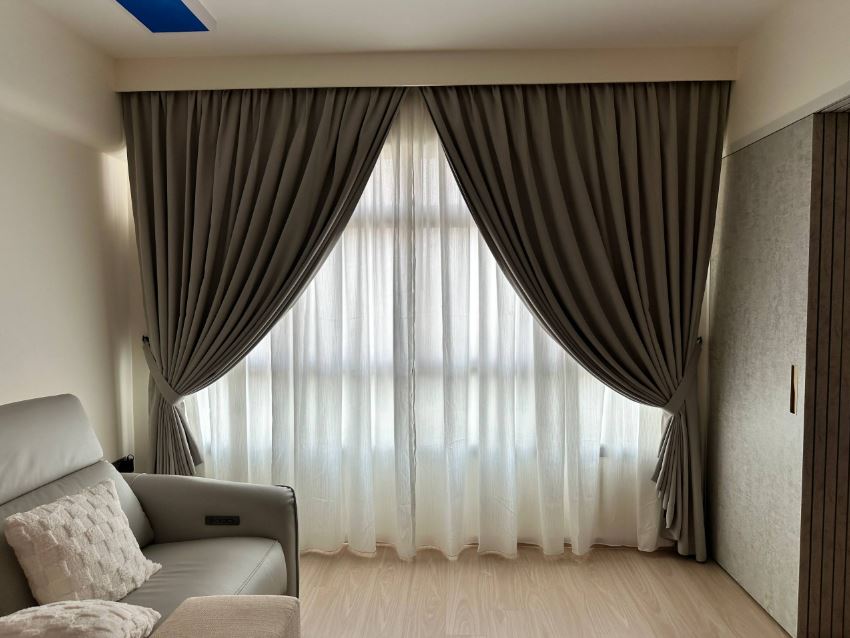
Ask about curtains in Singapore and you will quickly meet three terms: day curtain, night curtain and dual. They sound like styles. They are really just descriptions of how much light each one is designed to stop, and choosing between them is easier once that is clear.
Day Curtains
A day curtain is made from light, translucent fabric — often called a sheer. It does not block the view of light so much as soften it, spreading harsh sun into a gentle glow and taking the hard edge off glare.
What it does well:
- Daytime privacy without darkness. People outside see a soft surface rather than into your room, while you keep natural light.
- Softening a large window. A wide expanse of glass looks far less stark with a sheer across it.
- Air movement. Light fabric still drifts with a breeze, which suits homes that keep windows open.
What it does not do is give privacy after dark. Once your lights are on and it is black outside, a sheer alone offers very little.
Night Curtains
A night curtain is the heavier, opaque layer. It is the one that actually darkens a room, blocks evening visibility from outside, and reduces the heat that comes through glass in the afternoon.
Two details matter more than the fabric itself:
- Fullness. A curtain gathered generously blocks better and hangs better than the same fabric stretched flat.
- Coverage at the edges. Most stray light in a bedroom comes in at the sides, not through the fabric. Enough width to overlap the frame makes a visible difference.
Dual Curtains
Dual simply means both layers on the same window, usually on a double track — the sheer nearest the glass, the heavier curtain in front. It is the most flexible arrangement because the window has two distinct settings rather than one.
Through a normal day that means sheer only in the morning, both open across the middle of the day, and the night curtain drawn once the sun turns or the lights go on.
Which One Suits Your Room
- Bedrooms: night curtains at minimum; dual if you like waking to soft light rather than a dark room.
- Living rooms: dual is the usual choice, because these rooms are used across the whole day.
- Study or spare room: a day curtain alone is often enough if the room is not slept in.
See the Fabrics in Your Own Light
Curtain fabric changes character completely depending on which way your windows face, so judging a sample at home is far more reliable than judging it in a showroom.
See the Fabrics in Your Own Light
We bring samples to you and hold them against your actual windows. WhatsApp Ristoire at +65 8878 4383 to arrange a site visit, or get a quick idea of cost first with our quote calculator at /calculator.
Related Articles
Door Mesh Singapore: Why More Homeowners Are Adding Retractable Mesh to Their Doors
September 24, 2026Ready to Transform Your Home?
Book a free site visit and we will measure your windows, recommend the right setup and give you a clear, no-obligation quote.