
The Automatic Door Seal: Stopping Dust, Insects and Noise
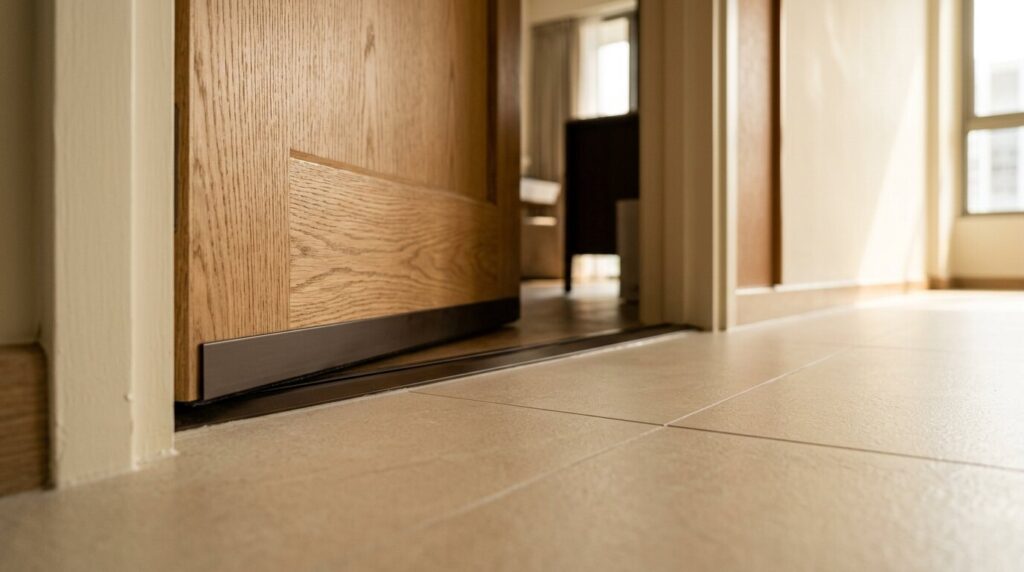
There is a gap under almost every internal door in your home. It is usually somewhere between one and two centimetres, it exists for good reasons, and most people never think about it. It is also a direct, permanently open channel between two rooms — for dust, insects, noise, light and conditioned air.
What an Automatic Door Seal Is
An automatic door seal is a mechanism fitted along the bottom edge of the door. When the door is open the seal sits retracted and invisible. As the door closes, the mechanism is triggered and the seal drops to meet the floor, closing the gap. Open the door again and it lifts away.
That drop-and-lift action is the whole idea. A fixed draught excluder or brush strip seals the gap too, but it also drags on your floor every single time the door moves. An automatic seal only touches the floor when the door is actually shut.
Why the Gap Exists at All
The clearance is deliberate. It allows the door to swing over uneven flooring, thresholds and rugs, and it lets air move between rooms. A door fitted tight to the floor would scrape, stick and wear. The gap is not a defect — which is exactly why sealing it needs a mechanism rather than a smaller gap.
What It Actually Changes
- Dust and insects. The under-door gap is a main route for both, particularly on doors leading to a service yard, a corridor or an external walkway.
- Noise. Sound travels remarkably well through an air gap. Closing it makes an audible difference to a bedroom or study beside a busy area.
- Air-conditioning. Cooled air escapes under the door continuously. Sealing a bedroom door helps the room hold its temperature.
- Light. The strip of light under a door is often what disturbs light sleepers and shift workers.
- Smells. Cooking and yard odours move room to room mostly at floor level.
Where It Is Worth Fitting
It is rarely worth doing every door. The ones that reliably justify it are the bedroom of a light sleeper, a study or home office needing quiet, the door between kitchen and living area, and any door opening onto a corridor or service yard.
Points to Check Before Fitting
- Floor level and finish — the seal must meet the floor cleanly across the full width
- Door thickness and material, which determine how the mechanism is mounted
- Existing thresholds or transition strips at the doorway
- Ventilation — some rooms genuinely need air movement, so seal deliberately rather than by default
Ask Us About Your Doors
Door seals are quoted after we have seen the door, its floor and its clearance — there is no sensible way to price one from a photograph alone.
Ask Us About Your Doors
Tell us which door is the problem and we will advise on whether a seal is the right fix. WhatsApp Ristoire at +65 8878 4383 to arrange a site visit, or get a quick idea of cost first with our quote calculator at /calculator.
Related Articles
Door Mesh Singapore: Why More Homeowners Are Adding Retractable Mesh to Their Doors
September 24, 2026Ready to Transform Your Home?
Book a free site visit and we will measure your windows, recommend the right setup and give you a clear, no-obligation quote.